
Introduction
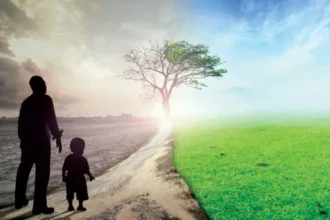
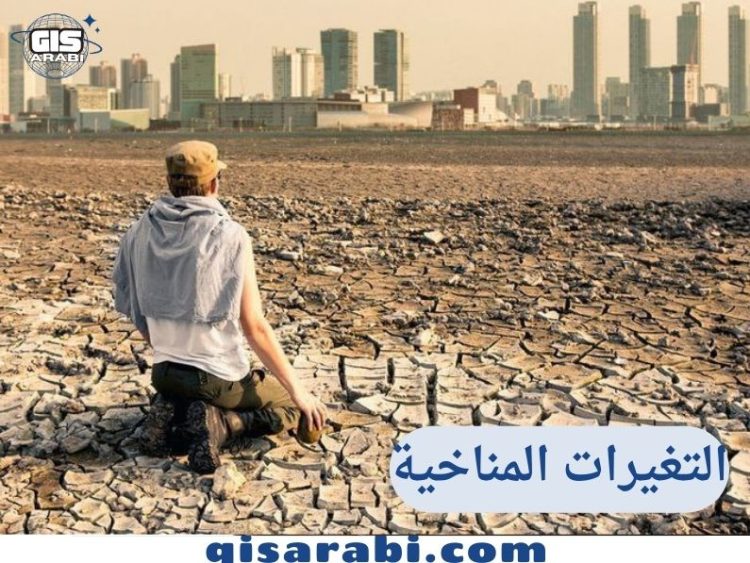
Climate change is one of the greatest challenges facing humanity in the 21st century, leading to rising global temperatures, melting ice, and an increase in natural disasters such as floods and droughts. Although some natural factors contribute to this change, human activity is the main driver behind the acceleration of this phenomenon since the Industrial Revolution.
The Main Causes of Climate Change
1. Human (Anthropogenic) Causes
-
A. Greenhouse Gas Emissions:
-
Fossil fuel combustion (oil, coal, gas) in industry and transportation releases carbon dioxide ($CO_2$), which accounts for 75% of emissions driving global warming.
-
Methane ($CH_4$) emitted from livestock farming and landfills, which is 25 times more potent than $CO_2$ at trapping heat.
-
Nitrogen oxides resulting from agricultural fertilizers and chemical industries.
-
-
B. Deforestation:
-
Trees absorb $CO_2$, so cutting them down (as seen in the Amazon rainforest) reduces the Earth’s capacity to purify the air.
-
$CO_2$ emissions due to deforestation are estimated at 10% of the global total.
-
-
C. Industry and Pollution:
-
Factories produce toxic gases such as chlorofluorocarbons (CFCs), which destroy the ozone layer and increase global warming.
-
Plastic waste releases harmful gases when burned or degraded.
-
-
D. Transportation and Energy:
-
Cars and airplanes account for 14% of global $CO_2$ emissions.
-
Coal-fired power plants are among the largest sources of pollution.
-
2. Natural Causes
-
A. Volcanic Activity:
-
When volcanoes erupt, large amounts of ash and sulfur dioxide ($SO_2$) are released, which can cause temporary cooling of the atmosphere (though they also release $CO_2$ over the long term).
-
-
B. Changes in Earth’s Orbit (Milankovitch Cycles):
-
Variations in the Earth’s axial tilt and its orbit around the sun affect the amount of solar radiation received, which can cause ice ages or natural warm periods.
-
-
C. Changes in Solar Activity:
-
Increased sunspots can lead to a slight rise in temperatures, but modern studies prove their impact is negligible compared to human factors.
-
Effects of Climate Change
-
Rising sea levels (due to melting polar ice).
-
Increasing natural disasters (hurricanes, floods, heatwaves, and droughts).
-
Extinction of many species due to changing natural habitats.
-
Threat to food security (impact of climate on agriculture and crops).
How Can We Mitigate Climate Change?
-
Transitioning to renewable energy (solar, wind, green hydrogen).
-
Improving energy efficiency in buildings and transportation.
-
Halting deforestation and planting more trees.
-
Imposing strict regulations on factory emissions.
-
Increasing societal awareness of the importance of reducing the carbon footprint.
Conclusion
Climate change is not merely a natural phenomenon; it is the product of human activities that deplete the Earth’s resources. If we do not act now, we will all pay the price through unprecedented environmental disasters. The solutions exist, but they require political will and global cooperation.
“We have no alternative planet… Let’s protect the Earth before it’s too late!”