
Introduction
Climate change is one of the most serious challenges facing humanity in the 21st century, as the planet witnesses unprecedented shifts in weather patterns and temperatures, driven primarily by human activities. According to the United Nations, the Earth’s average temperature has risen by 1.1°C since pre-industrial times, with projections pointing to an increase of 2.8°C by the end of the century if current policies continue. This article examines the causes of this crisis, its devastating impacts, and potential solutions to address it.
1. Definition and Causes of Climate Change
Climate change is a long-term shift in temperatures and weather patterns, whether in a specific region or globally. While past climate fluctuations resulted from natural factors such as volcanic activity or solar variations, human activities have become the primary driver since the 19th century, mainly due to:
-
Fossil fuel combustion (coal, oil, gas), which produces 75% of global greenhouse gas emissions, such as carbon dioxide and methane.
-
Deforestation: 12 million hectares are lost annually, reducing the Earth’s capacity to absorb carbon.
-
Agricultural activities: Livestock farming releases methane, while fertilizers release nitrous oxide.
-
Industry and transportation: The transportation sector alone accounts for 25% of global carbon dioxide emissions.
2. The Devastating Impacts of Climate Change
The repercussions of climate change go beyond rising temperatures to include:
-
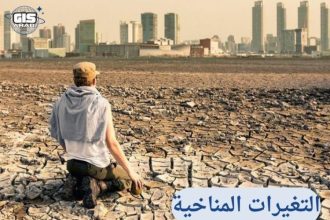
Extreme weather events: Such as the devastating 2022 floods in Pakistan and wildfires in Australia, the severity of which increased by 30% due to climate change.
-
Sea-level rise: The level has risen by 12 cm since 1880, with projections of islands such as the Maldives submerging.
-
Threat to biodiversity: One million species are threatened with extinction due to shifting habitats and warming oceans.
-
Health crises: Climate change is projected to cause an additional 250,000 deaths annually by 2030 due to malnutrition and vector-borne diseases.
-
Forced migration: It is estimated that 98 million people suffered from food insecurity in 2020 due to climatic conditions.
3. Potential Solutions
To avert catastrophe, urgent measures must be adopted, including:
-
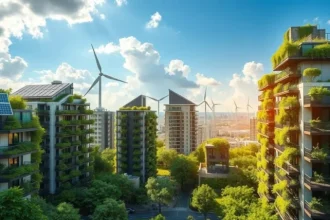
Transitioning to renewable energy: Such as solar and wind power, which currently account for 26% of global electricity generation.
-
Protecting ecosystems: Reforestating and protecting oceans, which absorb 30% of carbon emissions.
-
Improving industrial efficiency: Reducing emissions from heavy industries like cement and steel, which are responsible for 20% of emissions.
-
Adapting to impacts: Building early warning systems for disasters, whose benefits are estimated at 10 times their cost.
-
International financing: Wealthy nations committing to providing $100 billion annually to developing countries to adapt to climate changes.
4. Challenges and Obstacles
Despite scientific consensus, global efforts face obstacles such as:
-
Climate tipping points: Such as the melting of the Greenland ice sheet, which could raise sea levels by 7 meters, or the collapse of the Amazon rainforest, which stores 10% of the world’s carbon.
-
Misinformation: Companies like ExxonMobil spent millions of dollars denying climate change, using tactics similar to the tobacco industry.
-
Global inequality: Poor countries, which contribute less than 1% of emissions, bear the heaviest burden of disasters.
-
Slow implementation: Only 24 out of 193 countries have fulfilled their climate commitments under the Paris Agreement.
5. Conclusion: A Shared Future
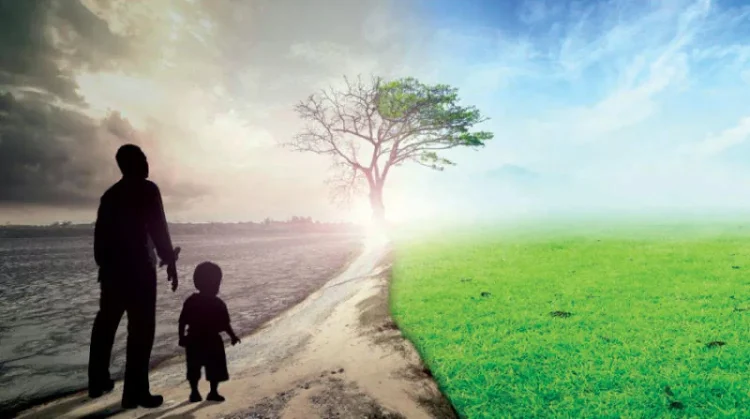
Climate change is not merely an environmental issue; it is an existential threat to the global economy, health, and stability. Achieving the 1.5°C target set by the Paris Agreement requires cutting emissions in half by 2030 and reaching net-zero by 2050. This aligns with United Nations Secretary-General António Guterres’s remark: “We need bold action, not empty promises.” The future depends on our choices today: either global cooperation or sliding toward an irreversible catastrophe.
“We have no alternative planet… Let’s protect the Earth before it’s too late!”